‘Why should we wait?’: How connected vehicle data could help improve road safety decision-making and save lives
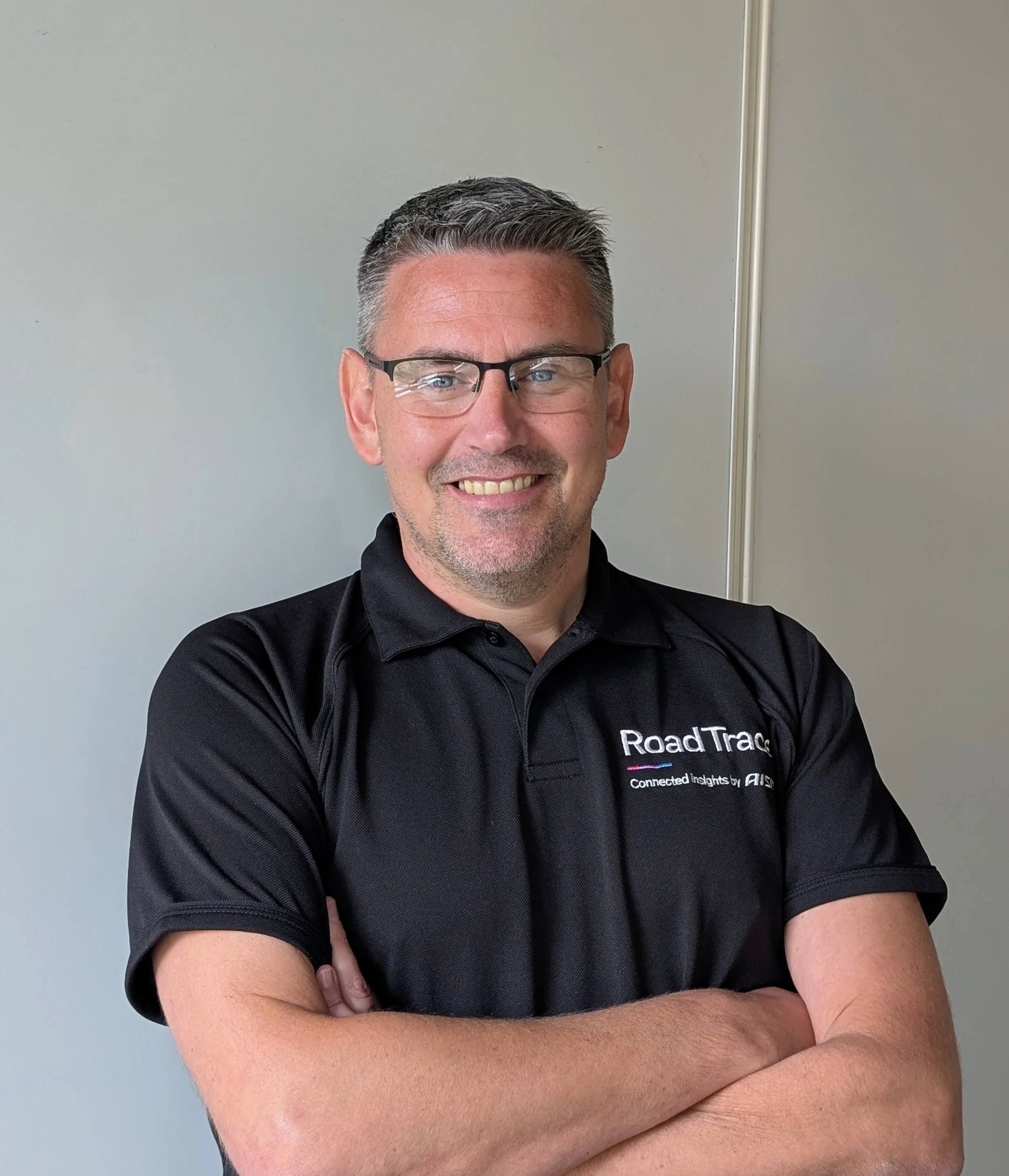
Wesley Bateson led the Road Safety Trust-funded Leeds pilot, ‘From Prediction to Prevention’, delivered in partnership with Leeds City Council, AISIN RoadTrace, Citisense and Metis Consultants.
In this deep-dive interview, he reflects on why the project was undertaken, what it demonstrated and what it could mean for the future of preventative road safety across the UK….
Why was this project needed?
When I first entered the road safety sector, one thing struck me almost immediately. Whether I was speaking with local authority officers, police forces, road safety partnerships or highways professionals, I kept hearing the same message: many road safety decisions are still driven by where people have already been killed or seriously injured.
I completely understood why. Historic collision STATS19 data has formed the foundation of road safety for decades and will always remain an essential part of understanding risk. However, I found myself asking a simple question: ‘Why should we have to wait?’.
Today's vehicles generate an enormous amount of information about how they are being driven and how drivers interact with the road network every single day. If that anonymised connected vehicle data can tell us where drivers are repeatedly braking harshly, encountering unexpected hazards or behaving in ways that indicate elevated risk, shouldn't we be exploring whether it can help us intervene before a serious collision occurs rather than afterwards?
That question became the driving force behind this project.
As I spent more time working across the sector, I also began to understand another challenge. Funding for road safety interventions is often linked to demonstrating historic harm. In many cases, authorities understandably have to justify investment using collision history because that is how funding mechanisms have traditionally operated.
Again, I understand why that system exists, but it also creates a difficult reality. It can mean that authorities know a location feels unsafe, residents are raising concerns and professionals believe improvements are needed, yet securing investment is far easier once people have already been injured.
Personally, I found that incredibly difficult to accept. If we have access to evidence that can help us understand emerging risk before tragedy occurs, we have a responsibility to explore how that evidence can support earlier intervention.
The Leeds pilot wasn't designed to replace traditional road safety practices or historic collision analysis. It was designed to explore whether connected vehicle data could add another layer of intelligence that helps us identify emerging risk earlier and support more informed decision making.
If we can understand risk before tragedy occurs, perhaps we can begin shifting from a reactive model towards a genuinely preventative one.
That, for me, was the purpose of the project from day one.
What challenge was the pilot trying to address?
The biggest challenge wasn't the technology. The technology already existed.
The real challenge was understanding whether different forms of evidence could be brought together in a practical way that genuinely supports better decisions.
Road safety is a complex discipline. No single dataset can tell the whole story. Historic collision data explains what has happened. Site observations explain physical conditions. Local knowledge provides context. Increasingly, connected vehicle data offers an understanding of how road users are interacting with the network today.
The Leeds pilot asked whether these different perspectives could complement one another rather than compete.
Could predictive connected vehicle data identify locations that deserved closer investigation?
Could temporary AI camera technology validate what was actually happening at those locations?
Could experienced road safety engineers then interpret that evidence and recommend practical interventions?
Most importantly, could this become a repeatable methodology that local authorities could adopt with confidence?
The project therefore wasn't simply testing a new dataset. It was testing a different way of making decisions.
Throughout the pilot we deliberately brought together organisations with different expertise. Leeds City Council provided local knowledge and strategic leadership. Connected vehicle analytics identified locations of potential future risk. AI-based video analysis helped validate behaviours observed on site. Experienced road safety engineers assessed the findings and translated them into practical recommendations.
That collaborative approach was fundamental because no single organisation could have achieved the same outcome independently.
Ultimately, the project wasn't trying to prove that one dataset was better than another.
It was asking a much more important question.
Can we combine multiple sources of intelligence to help road authorities make better informed decisions that improve safety before serious collisions occur?
That was the challenge we set ourselves.
What did the project demonstrate?
For me, one of the most encouraging outcomes from the Leeds pilot was that it demonstrated the value of bringing different forms of evidence together to support decision making.
The project was never about proving that connected vehicle data should replace traditional approaches to road safety. Historic collision data remains fundamental, and engineering expertise, local knowledge and professional judgement will always be essential.
What the pilot demonstrated is that predictive intelligence can strengthen those existing processes.
By analysing connected vehicle behaviour across the network, we were able to identify locations where drivers were consistently experiencing difficulty, often before those locations had become high-profile collision sites. Those findings were then independently explored through temporary AI camera deployment and professional engineering assessment, providing additional confidence that the locations genuinely warranted further consideration.
That layered approach was particularly important.
Rather than relying on a single source of evidence, we combined multiple perspectives to build a richer understanding of risk. Connected vehicle data highlighted potential concern. AI video analysis helped explain what road users were actually doing. Engineering expertise translated those observations into practical recommendations that could be considered by the highway authority.
For me, this demonstrated something much bigger than a successful technology trial.
It demonstrated a repeatable methodology for understanding road safety risk.
Perhaps just as importantly, the project showed that innovation does not need to replace established practice. Instead, it can enhance it by providing earlier insight and supporting more informed decisions.
Throughout the project we remained focused on one simple objective: helping decision makers understand more about the road network before serious collisions occur.
If authorities are equipped with better evidence, they are better placed to prioritise investment, justify interventions and make informed decisions about where limited resources can have the greatest impact.
Ultimately, I believe the Leeds pilot demonstrated that preventative road safety is no longer simply an aspiration. It is something that can now be supported by evidence, collaboration and practical delivery.
Was there anything that particularly surprised you during the project?
Without question, yes.
Going into the project, I was focused almost entirely on road safety.
Coming out of it, I realised we had been looking at something much bigger.
One of the biggest surprises for me was recognising that the intelligence generated through the project has value far beyond identifying future collision risk.
Every day, highway authorities make decisions about maintenance programmes, active travel schemes, traffic management, network resilience, asset management and investment priorities. Traditionally, those decisions are often informed by different datasets owned by different teams across an organisation.
What became increasingly clear throughout the Leeds pilot was that connected vehicle data can contribute to many of those discussions.
Understanding where drivers are repeatedly braking harshly, slowing unexpectedly or interacting with the road environment in unusual ways doesn't simply provide insight into road safety. It also helps build a broader understanding of how the highway network is functioning.
I began the project thinking about road safety.
I finished the project thinking about highways decision making.
Road safety shouldn't exist in isolation from the wider highways function. Every investment made on the network has the potential to influence safety outcomes, whether that's a junction improvement, a walking and cycling scheme, resurfacing programme or changes to traffic management.
The project reinforced the importance of breaking down traditional silos and viewing road safety as an integral part of wider network management rather than a separate discipline.
Perhaps the biggest lesson I took away personally was that better decisions come from better evidence.
The more we can combine different sources of intelligence, the better equipped we are to understand not only where risk exists today, but how our transport networks can evolve to become safer, more efficient and more resilient in the future.
How important was collaboration to the success of the project?
It would be impossible to talk about this project without talking about collaboration.
In many ways, I believe collaboration was the single biggest reason the project succeeded.
Road safety is a complex challenge that cannot be solved by one organisation working in isolation. Local authorities understand their networks and communities better than anyone. Engineers bring decades of professional experience and judgement. Technology providers contribute new sources of intelligence. Researchers and analysts help interpret evidence. Each has a different perspective, but when those perspectives are brought together, they create something far more valuable than any one organisation could achieve alone.
That was exactly what happened in Leeds.
Leeds City Council embraced the opportunity to explore a different way of understanding road safety risk. AISIN RoadTrace provided predictive connected vehicle intelligence. Citisense independently validated locations using AI-powered video analysis. Metis Consultants applied professional engineering expertise to interpret the findings and recommend practical interventions. The Road Safety Trust made the project possible through its willingness to support innovation.
No single organisation could have delivered those outcomes independently.
What impressed me most throughout the project was that everyone remained focused on the same objective: improving road safety through better evidence and informed decision making.
There was never a sense of organisations protecting their own solutions or competing to prove one approach was better than another. Instead, each partner contributed their own expertise to build a more complete understanding of risk.
For me, that's one of the most important lessons from the project.
The future of preventative road safety is unlikely to come from one new technology or one new dataset.
It will come from organisations working together, sharing evidence and combining their expertise to make better decisions.
If we want to accelerate progress towards reducing deaths and serious injuries on our roads, collaboration will be just as important as innovation.
What do you believe are the biggest barriers to adopting a more preventative approach to road safety?
Interestingly, I don't believe the biggest barrier is technology.
The technology exists today. The challenge is how we use it.
One of the frustrations I discovered while working in road safety is that many local authorities genuinely want to take a more preventative approach, but they are operating within funding models and investment processes that have historically relied on evidence of collisions that have already occurred.
That's entirely understandable. Public money must be allocated responsibly and decisions need to be supported by robust evidence.
However, it also creates an obvious question.
If we now have access to new forms of intelligence that help us identify emerging risk before serious collisions occur, how do we begin incorporating that evidence into future decision making?
For me, that's the conversation we now need to have.
The Leeds pilot demonstrated that predictive intelligence can support existing road safety processes. The next challenge is ensuring authorities have practical routes to use that intelligence as part of their everyday decision making.
I also believe we need to think beyond traditional organisational structures.
Road safety shouldn't sit within one team while highways maintenance, active travel, network management and asset management each work independently using different information.
Every investment made on the highway network has the potential to influence safety outcomes.
The more we can bring together different datasets, different disciplines and different teams, the more informed our decisions become.
Ultimately, I don't think the question is whether we can move towards a more preventative approach.
The evidence increasingly suggests that we can.
The question is how quickly we choose to embrace it.
Looking ahead, what would success look like, and what are the next steps?
If someone asked me what success looks like five years from now, my answer would actually be very simple.
I hope we stop accepting that serious collisions have to happen before meaningful action is taken.
If this Leeds project has genuinely made a difference, I hope it won't simply be remembered as a successful innovation pilot.
I hope it will be remembered as demonstrating that there is another way.
A way of combining predictive intelligence, engineering expertise and professional judgement to support earlier, evidence-based decisions.
One of the most important outcomes from the project is that the work doesn't have to stop with Leeds.
The methodology developed and demonstrated through this collaboration has shown that connected vehicle data, independent validation and engineering expertise can be brought together in a practical and repeatable way to support highway authorities.
That is perhaps the project's greatest legacy. For me, that is exactly what innovation funding should achieve, not simply proving that something works, but leaving behind a practical model that others can adopt and build upon.
It has helped move the conversation beyond asking whether preventative road safety is possible and towards considering how it can be implemented more widely.
Since completing the project, the approach demonstrated in Leeds has also been translated into an operational managed service that enables highway authorities to adopt the same methodology without needing to commission a bespoke innovation project. That means the learning from Leeds is no longer confined to a single pilot; it now provides a practical route for wider adoption across the UK.
For me personally, however, success isn't measured by technology or procurement routes.
It is measured by outcomes.
If, in years to come, fewer families experience the devastating consequences of losing a loved one or seeing someone seriously injured on our roads because authorities were able to identify and address risk earlier, then I believe this project will have achieved exactly what it set out to do.
That was always the vision.
Not simply to demonstrate innovation.
But to help create a future where we do everything we reasonably can to prevent harm before it happens.
Because if we have the ability to identify risk earlier, then the real question is the one that inspired this project from the very beginning.
Why should we wait?
6 August 2026